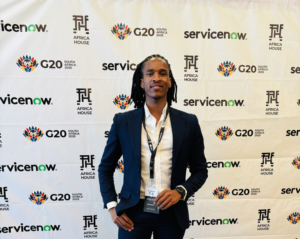
Last week, world leaders gathered in New York City for the 80th United Nations General Assembly (UNGA80). While heads of state, diplomats and business leaders engaged in high-level negotiations and official sessions, a series of sectoral conversations and side events also unfolded on the margins of the Assembly. Funda Wande’s Head of Programmes, Zolani Metu and CEO Phumelele Nhlapo attended these engagements with a clear purpose of positioning foundational learning at the heart of global political discourse.
Beyond the obvious geopolitical tensions which pervaded the discourse amongst political leaders, South Africa did an incredible job in bringing different sectors of society into generative conversations which protect multilateralism and are anchored in promoting solidarity, equality and sustainability; all of which are the key thematic areas of the South African G20 presidency.
South Africa’s G20 presidency set a clear tone for the multilateral engagements that were happening during the high-level week, and it was evident that our country’s delegation came prepared and represented the nation with heightened professionalism and competency
Recomendations
-
-
The FLN and funding community needs to transcend its business as usual and start thinking through a post-conflict strategy for supercharging foundational learning in Gaza, South Sudan, the DRC and Ukraine. We don’t need more research to tell us that there are significant learning losses occurring due to conflict in the regions.
As one would expect, the funding shifts triggered by the USAID exodus in Africa found prominence in the discourse about sustainable investment in African development. Leaders in the non-profit and philanthropy space seemed to agree that the changing funding landscape necessitates a re-imagination of development finance and that the state should always be at the centre of development rather than the observable reliance on foreign aid and philanthropic initiatives. Of course, no government can resolve societal challenges on its own; private philanthropies and the NGO sector have a significant role to play in supporting the materialisation of government mandates. However, leaders seem to agree that the state needs to play a leading role as a means to balance all interests, ensure equitable distribution of opportunities, and strengthen alignment of initiatives with National Development Plans (NDPs) and Sustainable Development Goals (SDGs). As a World Bank representative said, the World Bank invests $8 billion on the African continent; it is time for governments to scale up.
-
It was clear to us that the conversation around financing for development needed a stronger voice from non-profit leaders because the agreements made during the high-level week consequently impact the work of NGOs who remain as critical partners to government in delivering development mandates. South African FLN entities do not always afford to attend these global platforms and there is an opportunity for founders to consider a form of financing that allows NGO leaders to have a voice in these spaces.
Furthermore, we welcome the efforts made by government and the private sector to strengthen digital infrastructure and other technological capabilities in the African continent. We are encouraged to see that South Africa has remained true in its commitment towards equality through elevating the staggering digital divide as a key concern and lobbying other partners and investors in the efforts to address it. We note that the conversation about digital public infrastructure remains highly generic and could benefit from having a clear focus. We further recognise that there remains a preoccupation with projects rather than a focus on building technological capabilities that can help improve efficiency in basic service delivery, improve economic participation of youth, and enhance learning in classrooms. Having a laser focus would help ensure that South Africa remains true to its priorities and avoid being directed by the interests of big tech companies on Wall Street.
-
South Africa should use education as a case-study for addressing the digital divide and strengthening digital infrastructure. DIRCO, DBE and the Communications ministry should collectively engage potential investors and innovators so that solutions remain true to the country’s priorities.
Throughout the various conversations happening at the high-level week, there seemed to be clear consensus amongst sectoral leaders that government-led development requires significant investment into strengthening state capabilities and supercharging technical support for governments who are scaling solutions. In India, for example, a marriage of political will and instructional improvement in classrooms has led to a 16 percentage point improvement in learning outcomes in some states. With Funda Wande playing a key role in supporting provinces in scaling foundational literacy and numeracy (FLN) interventions, we have to constantly learn how to best support provinces and be a reliable technical support partner to them.
-
From the SEMAFOR summit which happened on the sidelines of UNGA80, it was evident that major corporations prioritise government relations and have the financial muscle to create business units whose focus is solely on government. This isn’t always possible for the non-profit sector due to fiscal constraints; however, as we constantly talk about government as a critical partner for scale, such capabilities are proving to be less of a privilege and more of a necessity.
-
-
The NGO sector should prioritise mainstreaming government relations roles into their teams and not lump the capabilities with other functions. There has to be a person whose job is to purely focus on working with and providing reliable technical support to government.
Moreover, while it is always encouraging to listen to incredible FLN organisations talking through how their structured pedagogical interventions are improving learning outcomes in different parts of the African continent; we note that such work is often reduced to country-levels and not tied back to a broader global political agenda for FLN. As we advocate for our specific work, we have to think about how we can use evidence to influence political discourse around how regional conflicts affect FLN outcomes and the long term effects of such cognitive injustice for children, societies and economies.
-
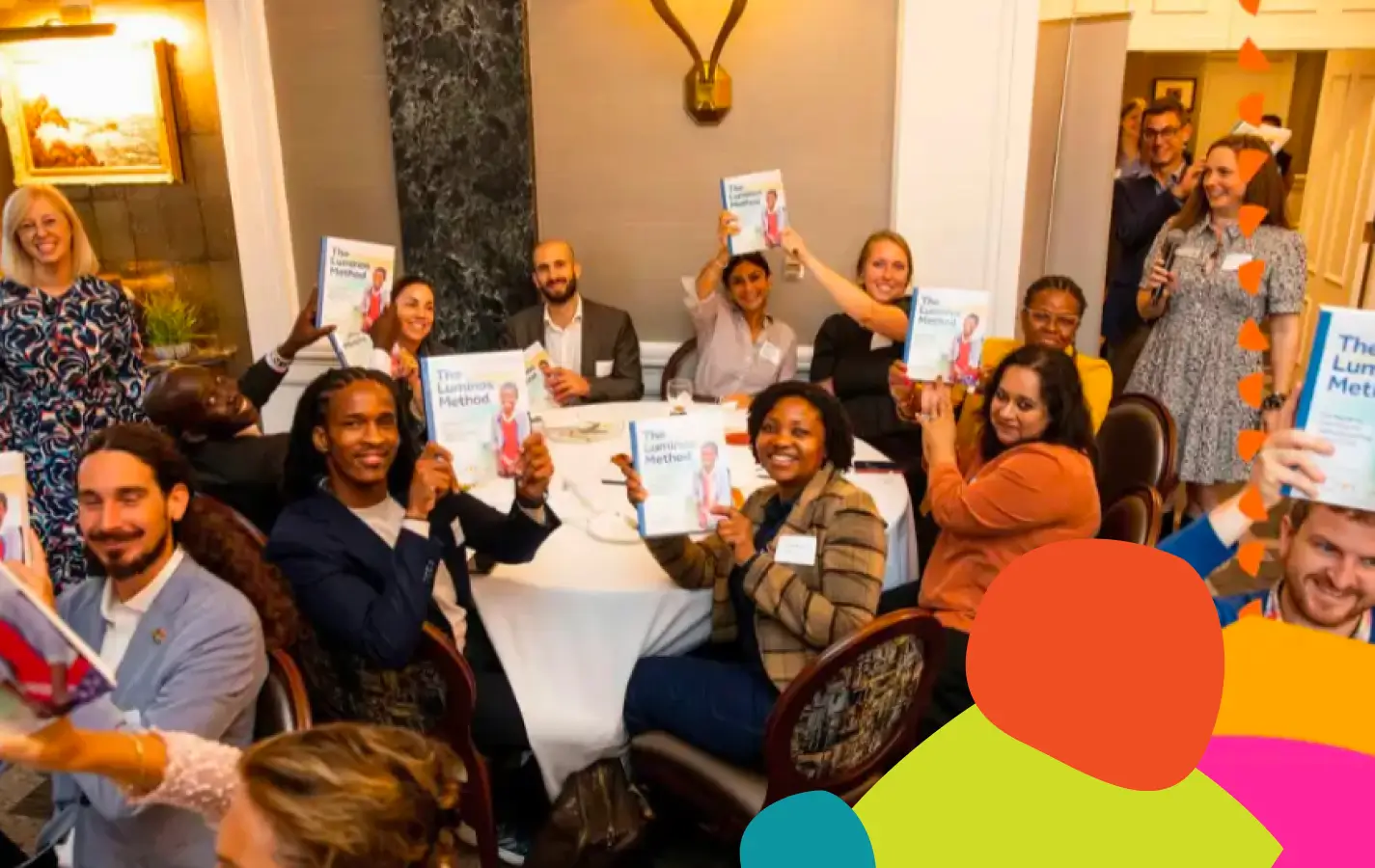
We have to learn from like-minded organisations such as TaRL Africa and the Luminos Fund so that we can provide a holistic programme for our teachers and learners in South Africa.

Throughout the various summits that were held at on the margins of UNGA80, it was clear that Africa is a critical focus area for most investors and innovators, and that the youthful nature of African demographics is an opportunity to be leveraged. It was also clear that digital infrastructure and financing for development were also key areas of focus and that there’s an opportunity for the NGO sector to be more involved in the discourse.
Furthermore, it was evident that leaders are concerned about the reality that the United States of America (USA) will have the G20 presidency next year; and the concerns are centred around whether or not the Trump presidency would carry out any of the recommendations made by the South African G20 presidency for the promotion of global solidarity, equality and sustainability. These are obviously legitimate concerns given the positions taken by the current American administration and that America has one of the biggest economies in the world. However, the global community and particularly Africa, has an opportunity to imagine sustainable development with an attitude of global solidarity that is driven through strong domestic policy and a regionally financed development agenda.
-
The year 2026 should be about G20 case-studies, where we shine light on initiatives started or continued by different member states in line with South Africa’s recommendations. Amongst other key priorities, a meaningful output of the G20 summit in November 2025 would be an agreement on case studies to shine light on, and a plan for learning exchanges amongst member states along the themes of solidarity, equality and sustainability. The world cannot and should not be held ransom by the politics of one nation; there are children and vulnerable African communities whose growth and prosperity relies on our ability to focus on what matters.
The clarion call for our sector at UNGA80 was for education NGOs to work collaboratively with each other and with governments to bring into reality an education system that reduces learning poverty and produces the learning outcomes current and future generations of children, the majority of whom will be in Africa, deserve. If we keep doing what we are doing, the current literacy crisis will persist for as many decades as it has existed. Nothing will change.
We need to imagine a different role for ourselves as a sector. One that moves us beyond our comfort zones, and sees us consistently choosing collaboration over silos, egos and logos. By creating a movement, with clusters of NGOs working in tandem in different regions, we can create a domino effect of impact that eventually defeats learning poverty. As an organisation we are happy to put ourselves up to be part of such a movement.
Conclusion
For South Africa and the continent, this moment is an opportunity to place education at the centre of development and to ensure that investments, policies, and collaborations deliver real change for children. If education NGOs, governments, and funders embrace collaboration over silos, the region can move decisively towards reducing learning poverty and securing a more equitable future for the next generation.