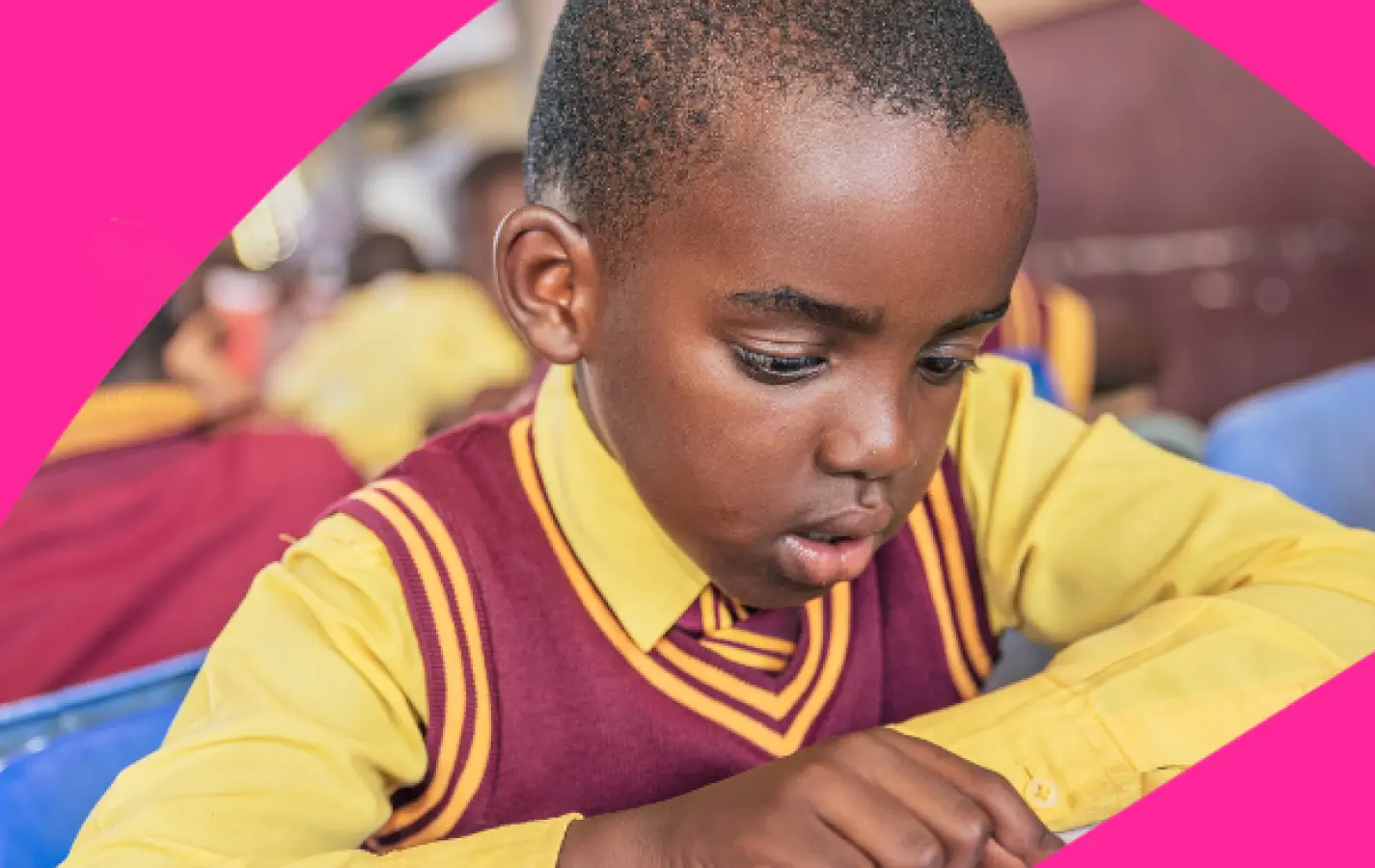
If a child cannot read, the rest of the just transition is an elegant theory with nowhere to land. I went to the Amazon to talk about energy and returned convinced that conversations about megawatts, microgrids and climate finance must make room for bedside lamps, shaded classrooms and the small stubborn habit of reading aloud. This is not a metaphor. It is a policy problem. The World Bank estimates that roughly 400 million learners have experienced climate related school disruptions since 2022. That number is a headline and it is a map of broken routines: classrooms emptied by floods, afternoons shortened by unbearable heat, and households where a single lamp tries to serve three siblings at once. The cost of those lost minutes is not merely academic. In South Africa, PIRLS 2021 reported that the majority of Grade 4 learners cannot read for meaning. Combine that with one of the highest levels of inequality in the world, and the arithmetic of loss becomes a moral problem.
At Funda Wande we do the stubborn, patient work of teaching children to read. Our work begins with the teacher. We invest in sustained professional development, not as a once-off workshop, but as a journey. Through structured training, ongoing instructional coaching, and in-classroom support, we walk alongside teachers as they strengthen their practice, lesson by lesson. Around them, we build Professional Learning Communities where teachers learn from one another, share challenges, and grow a collective craft rooted in real classroom experience. Alongside this, we design high-quality learning and teaching materials that bring structure, clarity, and confidence into the classroom. Each resource is carefully developed to support both the teacher and the learner, with a singular goal in mind: to improve learning outcomes so that every child can read for meaning by the end of Grade 3. These interventions matter. They change classrooms. They change futures. Yet every achievement rests on a fragile runway of time and attention. When climate shocks clip that runway, the best instructional designs cannot land.
Protecting the learning day is one of the smallest equity investments with the largest possible return
Climate and energy alter learning in three unglamorous and immediate ways. First, they steal time. Floods, storms or extreme heat shorten the school day or force closures. In January this year my nephew lost a day of lessons when Mthatha recorded temperatures around 40 degrees Celsius and schools dismissed learners early. Last week in Cape Town a colleague’s daughter came home midmorning a for the exact same thing. As of writing this, the severe floods in Limpopo have led to school closures across the province. These are not isolated anecdotes. They are the daily business of disruption in many places. Second, environmental stress changes the learning environment. A classroom that cooks under the sun, or that goes dark during a power cut, is simply harder to learn in. Third, energy poverty erodes practice. Reading is not a one-off event. It grows minute by minute at home. When households lack reliable light, or when caregivers lengthen their working hours because stoves or pumps fail, those minutes evaporate.

You do not need a PhD to spot the mechanisms. Try marking homework by candlelight. Try reading aloud when the house is hot enough that concentration slips away. And yet these things are seldom measured when education programmes are evaluated. That is a grave oversight. If we treat energy and climate as peripheral to education, we will keep being surprised by weak outcomes. If we treat them as part of the definition of the problem, we open a different set of possibilities.
Practical partnerships between education and energy practitioners can yield outsized returns. Consider a solar reading corner at a school paired with a simple after school routine and an attendance log. That modest combination can produce measurable gains. Low cost cooling strategies, shade cloth and a protected reading block can preserve focus during heat waves. Solar reading lamps distributed with caregiver prompts and graded readers can add the handful of minutes per night that, when aggregated, turn into real progress over a term. None of these interventions are glamorous. None require a global summit to explain. What they do require is that we stop mistaking brilliant engineering for an education strategy.
Practice matters as much as technology. A lamp without a routine is a gadget. A fan without teacher buy in is a weatherproof disappointment. That is why research and measurement must be part of any cross-sector conversation. We need indicators that tell us when the learning day is at risk. Imagine a dashboard that logs disruption days, captures teacher-rated classroom temperature, and asks a simple question for households: did anyone have a safe light to read by last night? These data points are cheap to collect and enormously valuable in explaining why an intervention works in one place and flops in another.
I spent many years in the energy sector working on power sector reform, regulation, stakeholder engagement and the just energy transition. In those rooms the conversation was often technocratic, full of modelling and contingency plans. Education rarely intersected in a meaningful way. That is changing, partly because the evidence is now unavoidable. But changing policy conversations requires more than evidence. It requires humility from donors, curiosity from implementers and a willingness to let local voices shape priorities.
Centring local voices is not an optional add-on. It is essential. At the summit indigenous leaders spoke about energy in terms that made immediate sense. For them energy access was not a technical deliverable. It was dignity, cultural continuity and the ability for young people to learn on their own terms. If the just transition ignores those perspectives, it risks becoming another form of extraction. Technology without consent becomes imposition. Funding without local authorship becomes a report on a problem rather than a solution
Gender must also be front and centre. When electricity is unreliable, girls are often the first to lose study time. They shoulder unpaid care work and they do not always have safe spaces to study after dark. Energy interventions that ignore gender can inadvertently widen the gaps they mean to close. Designing for equitable outcomes requires asking simple questions from the start. Who will benefit first? Who will be left out? Who is responsible for maintenance? If those questions sound dull, they are also the ones that save projects from failure.
So what should change? First, ministries and donors must fund small, rapid pilots that explicitly test whether energy interventions protect learning time. These pilots should be measurable and honest. Second, monitoring systems must add a handful of indicators that tell us when the learning day is threatened. Third, the just transition must legitimately centre voices often excluded from technical rooms. Local teachers, caregivers, indigenous leaders and young people themselves must be coauthors of solutions, not footnotes in grant proposals.
An energy summit can be the place to sketch grand roadmaps. It must also be the place to ask the very practical question that reveals whether our plans are connected to reality. Do the children in our trials have light to read by tonight? If the answer is no, the plan needs to change. If the answer is yes, we should know why and whether that solution can be shared with the next school down the road.
Protecting the learning day is one of the smallest equity investments with the largest possible return. It is political, practical and human. It is what justice looks like in the life of a child who learns to read. If that child is left behind, the rest of the transition will be only a promise. If that child is brought forward, the transition will have a future worth arguing for. And if there is one thing policy makers should remember as they chase megawatts and carbon budgets, it is this: light for learning is not a luxury. It is a policy lever.